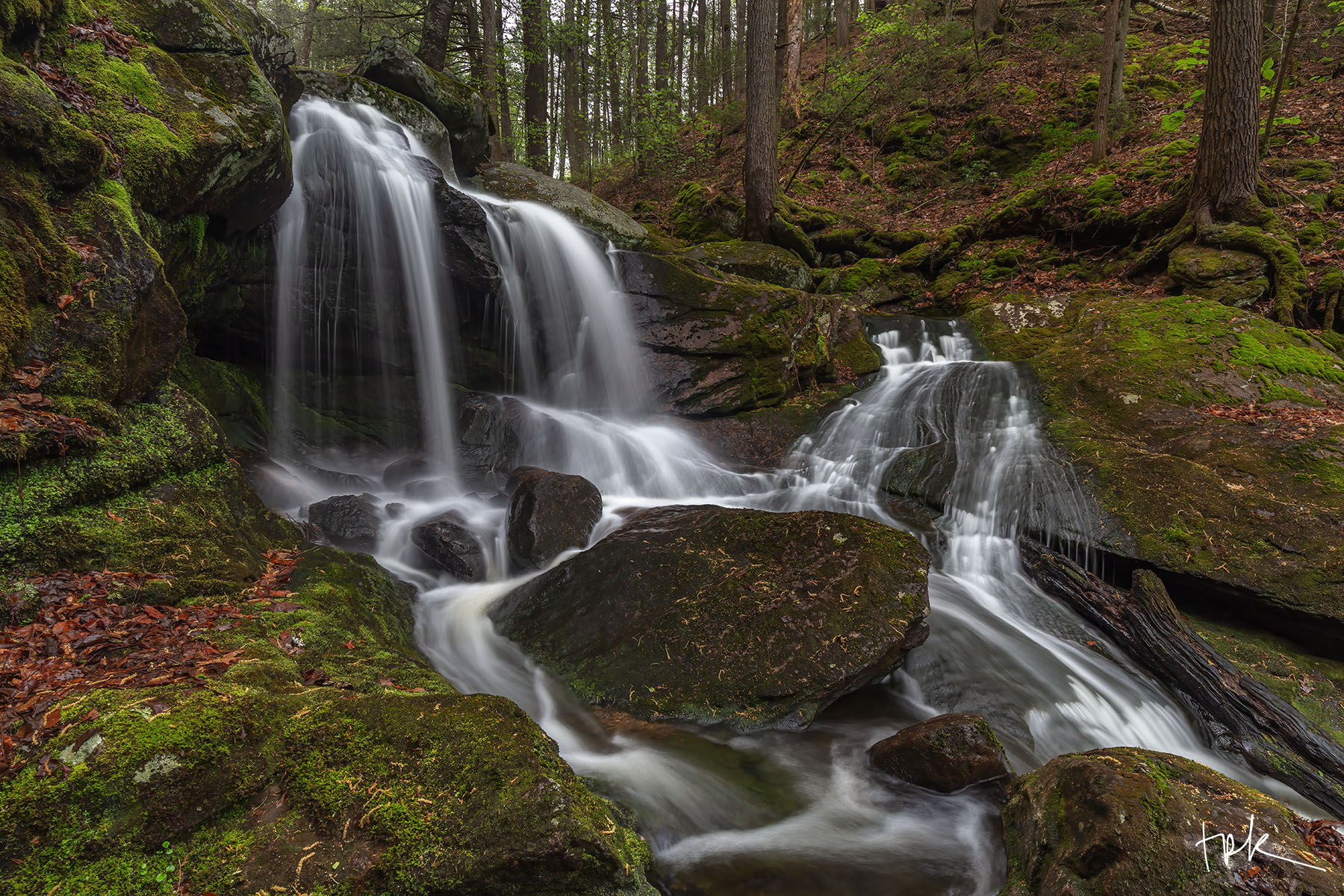
Waterfall Photography Tips: Essential Gear, Exposure Settings & Composition
Waterfall photography blends technical settings with creative exploration. Whether you’re new to photographing waterfalls or looking to refine your long-exposure technique, this guide shares the gear, exposure settings, and composition tips I use when creating fine art waterfall images in the field. Over the years, waterfalls have become one of my favorite subjects - especially in my home state of Connecticut - and I hope these insights help you in your own creative process.
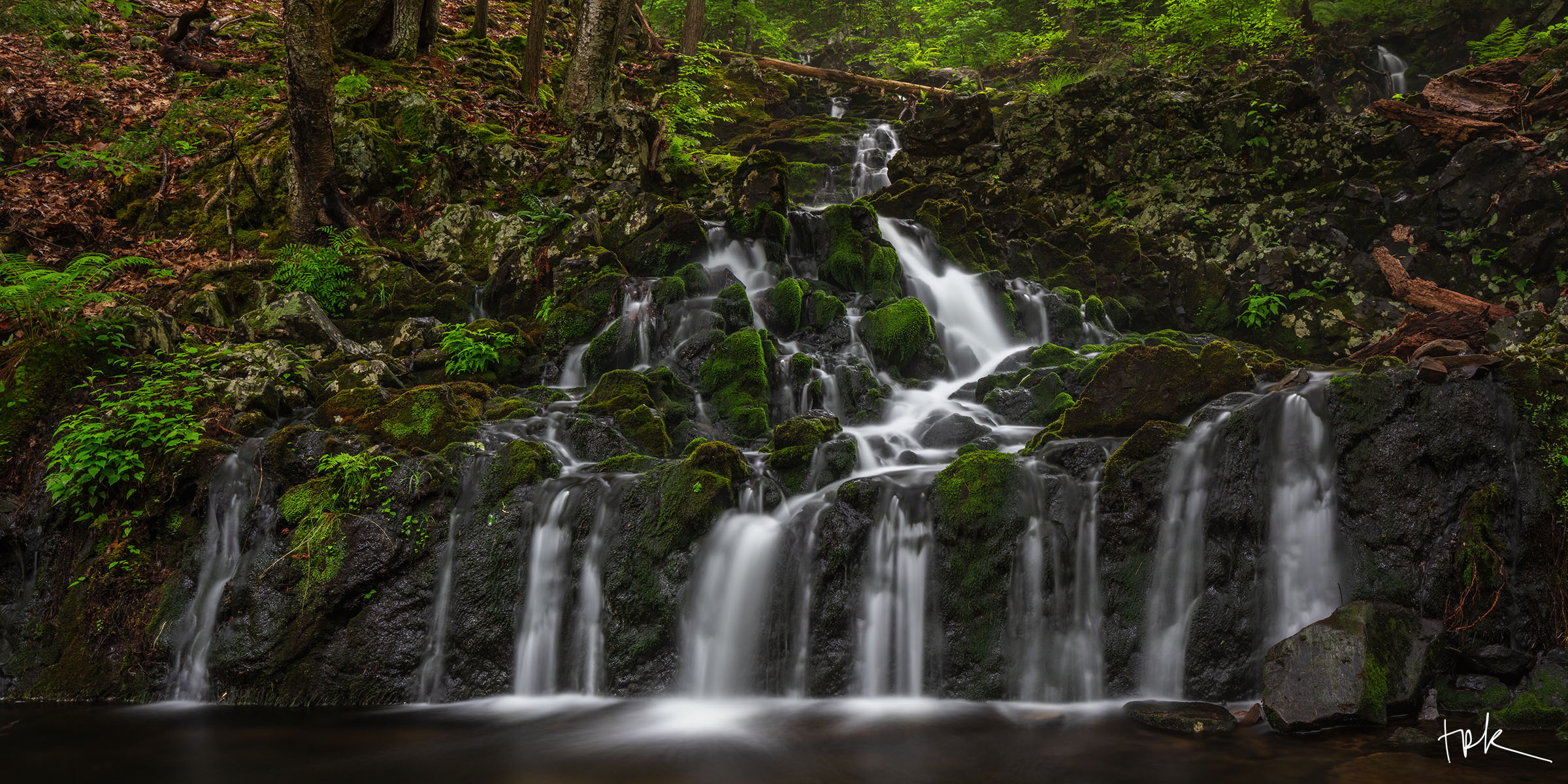
Essential Gear for Waterfall Photography
The most important gear for photographing waterfalls isn’t an expensive camera or lens - it’s the accessories that help you slow down your shutter and stay flexible in tricky terrain.
Sturdy Tripod
Since long exposures are often key to waterfall images, a solid tripod is essential. In-body stabilization can help with exposures under half a second, but nothing replaces the consistency and flexibility of a tripod unless you’re trying to keep your kit ultra-light on a long hike.
Waterproof Boots or Waders
Some of the best vantage points are in the middle of the stream or knee-deep in the plunge pool. Waterproof boots or chest waders let you move safely and confidently without worrying about getting soaked.
Filters
Two filters make a big difference when photographing waterfalls:
- Circular Polarizer (CPL): Cuts glare on the water’s surface, revealing texture, color, and detail beneath the flow.
- Neutral Density (ND): Reduces the light reaching your sensor, allowing slower shutter speeds even on bright days. If you’re starting small, begin with a 3-stop ND. A 2-stop and a 6-stop make a versatile trio.
For a flexible, high-quality setup, I highly recommend the NiSi 100mm Square Filter System. It comes with their True Colour CPL, holds up to three filters, and works across multiple lenses with the included adapters.
Exposure Settings for Waterfall Photography
Dialing in exposure settings is where technical understanding meets creative interpretation. Getting the aperture right will ensure your image is sharp while fine-tuning shutter speed will allow you to shape the appearance of the flowing water.
Aperture: f/8 to f/11 for Sharpness and Depth
A good starting point for waterfall photography is f/8 to f/11. This range provides excellent sharpness, good depth of field, and avoids the diffraction that can soften images at the narrowest apertures. If your composition includes very close foreground elements and the waterfall behind them, consider capturing two or three images at different focus points for a simple focus stack.
Shutter Speed: The Key to Long-Exposure Waterfall Photography
Shutter speed determines how the water looks - from silky smooth to textured and dynamic.
Waterfall Type and Size
Waterfall enthusiasts can tell you about ten or more types of waterfalls, but for this guide, I’ll reference two common types: “plunges” and “horsetails”.
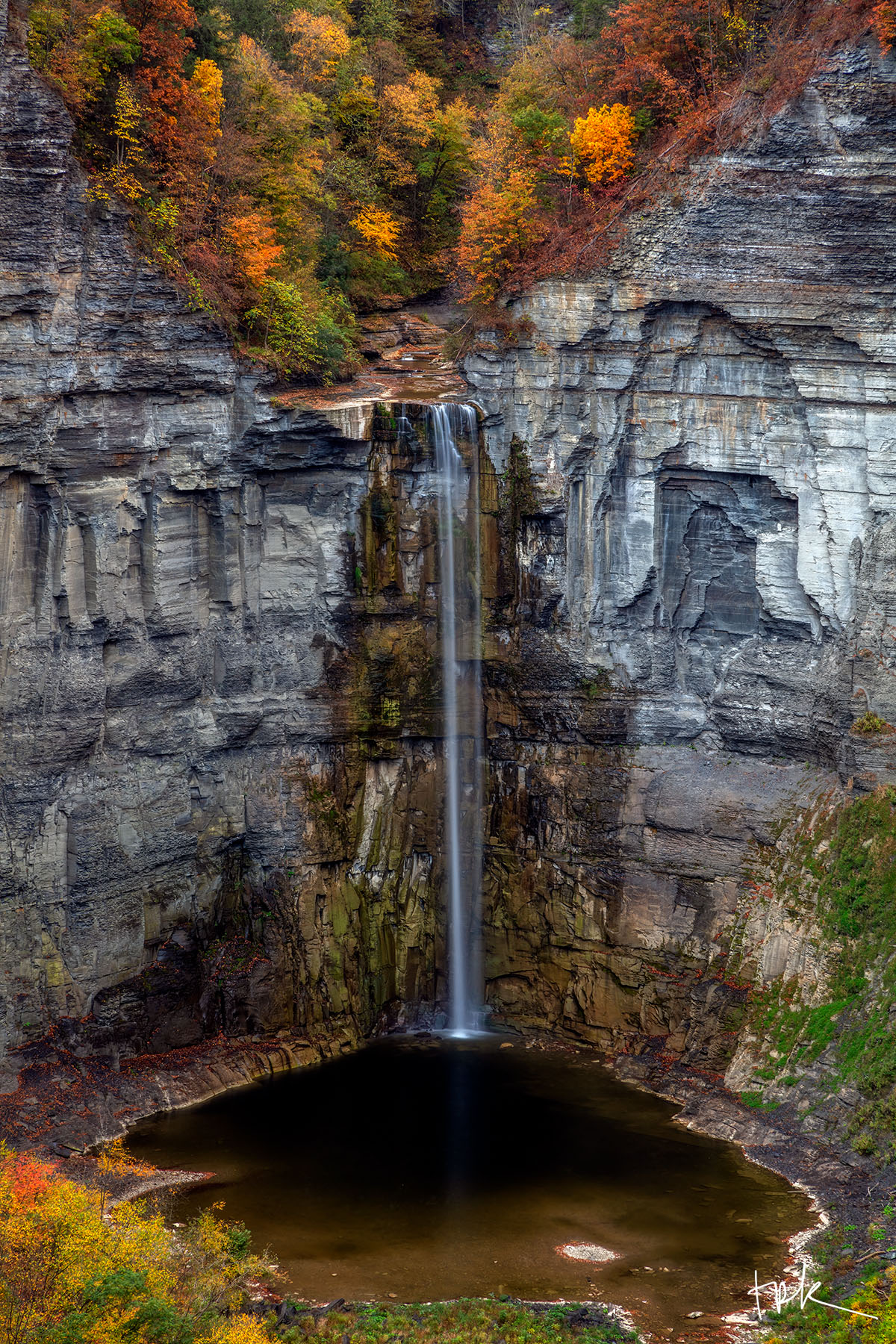
- Plunge waterfalls: Water drops uninterrupted from a ledge.
- Start at 1–3 seconds
- Apply a neutral density filter if unable to achieve proper exposure within the aperture range above
- Taller falls often benefit from longer exposures, such as 5 seconds or more, to avoid a “zig-zag” or choppy look
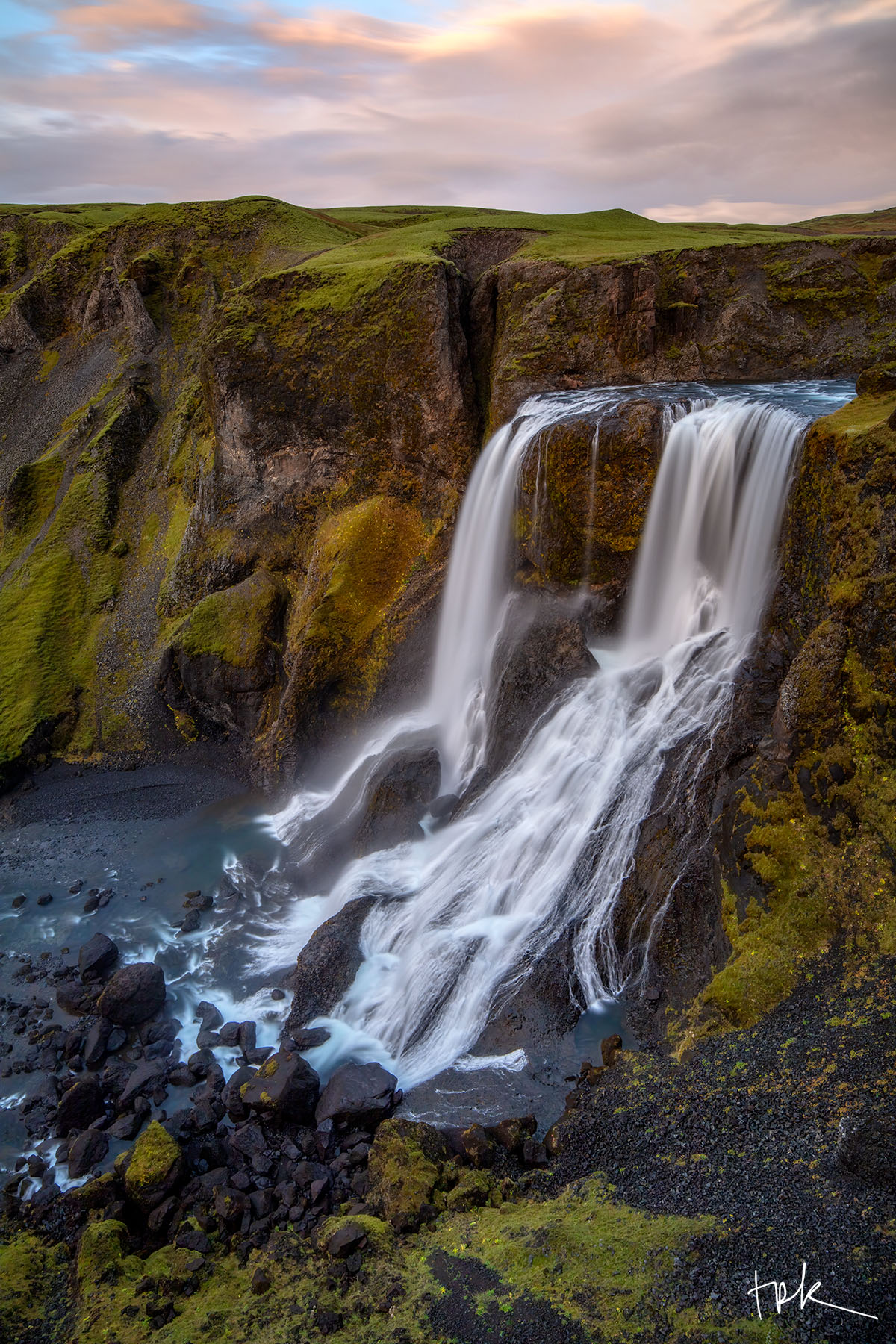
- Horsetail waterfalls: Water maintains contact with the rock as it descends.
- Shorter exposures like 0.5 seconds often preserve more texture and prevent the water from turning into a featureless blur in areas of heavier flow
- Use a neutral density filter if unable to expose the image correctly with your desired shutter speed and the ambient light
Style & Personal Preference
Every photographer’s ideal look is different. I used to favor ultra-long exposures for completely smooth, white-colored water. Over time, I’ve come to prefer a balance where the water is blurred but retains delicate threads of detail - especially in portions close to the foreground when passing over rock surfaces. There are also moments when freezing the water completely is the strongest choice. Under stormy or dark skies, fast shutter speeds can emphasize power and turbulence in a dramatic way. My best advice is to experiment. Try multiple shutter speeds at each waterfall until you discover the look that resonates with your style.
Blending for Windy Conditions
If wind is rustling leaves and vegetation around the waterfall, long exposures can create unwanted motion blur and make the image look sloppy. On those days, I take an additional frame (or several) at a fast shutter speed to freeze the surrounding foliage. Later, I blend the sharp vegetation with the long-exposure water in Photoshop for a clean, natural look.
Composition Tips for Waterfall Photography
Your first instinct may be to photograph a waterfall straight on - and sometimes that’s the perfect choice - however, exploring the area around the falls can lead to more compelling and unique compositions.
Explore Multiple Angles
Try shooting:
- From the side
- From above
- From downstream
- From the opposite bank
- From a low perspective close to the water
Waterfalls often offer more variety than you expect and I’m often fascinated to see how another artist interpreted a waterfall in a way that didn’t occur to me when I was there.
Use Foreground Intentionally
Rocks, mossy logs, swirling water, or river patterns can draw the viewer into the frame - but they aren’t always necessary. If a foreground element feels forced or distracting, simplify the composition and focus entirely on the waterfall.
Let the Scene Guide You
Spend time exploring, studying the flow of the water and the structure of the surrounding landscape. Good waterfall compositions come from curiosity and patience, not just a quick snap from the obvious viewpoint.
Conclusion
Waterfall photography rewards those who take the time to explore - both technically and creatively. With the right gear, thoughtful exposure choices, and a willingness to move around and experiment, you can create images that capture the beauty, energy, and serenity of these remarkable natural scenes. The more you photograph waterfalls, the more you’ll refine your technique and develop a style that feels like your own. For inspiration and more fine art waterfall images, explore my Waterfalls gallery.